Dpt. of Chemcical and Environmental Engineering
Escuela de Ingeniería
Alameda urquijo s/n
48013 Bilbao. SPAIN
Phone : +34946014069
pedroluis.arias@ehu.eus

Université de lorraine
Universidad del País Vasco

Université Paris-Saclay

Université de pau et pays de l'adour

IPREM

LERMAB

LMT Cachan
Abstract due November 19, 2017
New December 17, 2017
Abstract acceptance November 30, 2017
New December 27, 2017
Paper submission January 14, 2018
New January 24, 2018
Review decision February 4, 2018
Submission of final paper March 4 10, 2018
ICOME’18 Secretary
Phone / Fax : +349430171 78/ 30
Email : icome18@lmt.ens-cachan.fr
Abstract:
Energy storage with facile grid integration is imperative as the energy mix becomes more diversified. This is especially true for integrating renewables, where intermittent, diurnal, and/or unpredictable energy generation may not coincide with energy demands. Energy storage is also a proven element to reach a sustainable and efficient management of any thermally driven process. The inherent thermodynamic limitations associated to a thermal system, such as the unavailability of an appropriate heat source, thermal losses or improvable cycle efficiencies, justify the implementation of a TES solution. This storage can be fulfilled using reaction cycles where energy is stored in the endothermic step and released in the exothermic one. If thermal energy is available at high temperatures (as in some chemical or metallurgical processes), it can be used to thermally reduce special materials such as perovskites. Their further oxidation using steam generates hydrogen which is the energy vector associated to fuel cells. In this lecture after a general presentation about the use of perovskitic materials for thermochemical energy storage applications, some new results about LaSrCoX mixed oxides (where X= Fe, Ni, Mn or Cr) will be presented and discussed. The objectives are to develop: a) more stable materials when submitted to many thermal cycles, b) materials able to suffer reduction at temperatures as low as possible and c) materials with a maximum reduction degree (δ, from ABO3 to ABO3-δ).Solid characterization techniques (BET, XRD,..) and thermal tests (TGA, DSC) will allow comparing the different formulations and provide insights for further developments
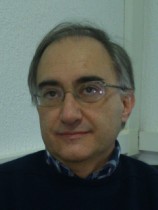
Pedro L. Arias holds a PhD from the University of the Basque Country since 1984. After postdoctoral work at the Imperial College of Science, Technology and Medicine (London, UK) and the Massachusetts Institute of Technology (Cambridge, US) he became Associate Professor at the Faculty of Engineering in Bilbao (1986-1990) where he has been since 1990 Professor and since 2013 Head of the Department of Chemical and Environmental Engineering. He leads the Sustainable Process Engineering Research Group dedicated to areas such as catalysts science and technology, sustainable process engineering and industrial waste recycling. He has published more than 140 research papers and supervised 20 PhD thesis.